Wednesday, October 28, 2009

Corn Syrup linked to bee colony collapse

An important new scientific study on the toxic effects of feeding high fructose corn syrup to bees.

Government researchers have found that high-fructose corn syrup, which is used as a sweetening agent in thousands of products, creates potentially dangerous levels of a toxic substance when heated.

The scientists – from USDA’s Agricultural Research Service in Tuscon and New Orleans and at the University of Wisconsin – were searching for a possible cause of Colony Collapse Disorder, a mysterious disease that has killed at least one-third of the nation’s commercial bees.

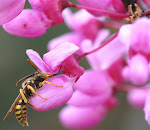
(c) photo by A. Schneider

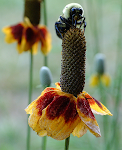
(c) photo by A. Schneider

The team targeted the popular sweetener because it is widely used both with honey bees and those used primarily for vital crop pollination.

High-fructose corn syrup is produced by grinding corn to produce corn starch, then that powder is processed to yield corn syrup, which is almost entirely glucose. Enzymes or proteins are then added which changes the glucose into fructose.

It is the fructose that food producers use to sweeten their products and by commercial beekeepers to strengthen their bees, to increase honey production and as a food supplement when natural sources of nectar and pollen have diminished.

During repeated tests, the researchers found that when the HFCS is heated it forms hydroxymethylfurfural or HMF which can kill honeybees. Alarmingly, they found when temperatures rose, levels of HMF increased steadily in proportion.

The study, by Blaise LeBlanc, Gillian Eggleston and their colleagues, is published this week in ACS’ Journal of Agricultural and Food Chemistry. The authors said their work could also help keep the substance out of soft drinks and dozens of other human foods that contain HFCS.

“The data are important for commercial beekeepers . . . and because HFCS is incorporated as a sweetener in many processed foods, the data from this study are important for human health as well,” states the report which was funded by the National Honey Board.

Laboratory studies in Sweden published this year have linked HMF to DNA damage in humans, the USDA team reported. In addition, HMF breaks down in the body to other substances – daughter metabolites ­– potentially more harmful than the original substance.

For close to a decade, researchers throughout the world have been searching for the cause of the widespread destruction of bee colonies.

In the U.S., the growing shortage of honey has caused the increased importation of foreign products, much of which is wrongly labeled to avoid paying tariffs on Chinese honey. Some are adulterated with illegal antibiotics on violation of FDA regulations.

Here is a link to the study published by the ACS.

Monday, October 19, 2009

Autumn beekeeping

Who would have thought that a hand full of powdered sugar would make a hive of bees so mad. Well it does.

My amazing beekeeping mentor and fellow journey-woman beekeeper came over to help me ready my hives for winter. I had been feeding the girls sugar syrup (2:1 sugar to water, pretty gooey) for about a month now.

We found that the girls have been quite industrious in converting the syrup to honey and if I keep at it over the next few weeks they hopefully will have enough food to get through the winter. Remember, since these are first year hives, I did not take any honey from them this year. Also both of my hives swarmed (one in May, the other in July), which set them back a bit in honey production, so winter starvation is a real threat for them.

To check for varroa mites I had put in a card board grid that slides in under my screened bottom board. Varroa mites are perfectly horrid little parasitic insects that not only fix themselves on adult bees and suck life fluids, but also get into the sealed brood and suck on the baby bees. And it is here that they do real damage; in addition to depleting life resources, the mites also can transfer diseases to the bees.

We found that - no surprise - both of my hives have mites. Almost all hives in North America (and in most of the word) do. But in one of my hives - Kathryn - a few of the bees had deformed wings - Deformed Wing Disease is something that bees can get from varroa mites. This is what my bees have.

I was so mad. And I felt I'd let my girls down by not checking earlier (I should have started checking in late summer). And furious at the mites.

My bee mentor had me dust my hives with powdered sugar, an increasingly common method of dealing with mites in a non-pesticidal way. The sugar makes the bees groom themselves more assiduously and also causes the mites to not be able to stick to the bees with their horrid little sticky feet so they fall off (and through the screened bottom board, where they fall out of the hive. If you have a solid bottom board they can climb back up and on the bees again). The bees do *not* like the sugar dusting. They came boiling up out of the hive boxes all dusty white and shouting at me.

I read that certain essential oils - spearmint and lemongrass and thyme - act as biopesticides and have have been shown in lab tests to kill the mites. My kind of solution. Also there is a product called "Honey Bee Healthy" which uses both spearmint and lemongrass oil to both stimulate bees to eat (when it is in the sugar syrup) and to calm them instead of smoke when you spray it on them. The latter works - I saw it myself. I found a recipe on line to make it at home (cheaper than ordering it from a company and simple to do). It was so fragrant that the bees clustered at my kitchen window screens while it cooked.

So in the remaining warm days I am trying to dust my bees with powdered sugar a few more times before it gets too cold, spray them with spearmint and lemongrass oil, and feed them as much sugar syrup as they'll eat.

It was cold this week - mornings in the 40s. The bees are starting to cluster in the hive as they do in winter; and the few who were outside moved soooooo slowly.


Monday, August 31, 2009

Hungry bees

Hello Bee Peeple:

So here is the embarrassing truth: I forgot my password to get back into this blog. Duh! I had written it down somewhere, but well, couldn't remember where I'd put it. Reverse engineered my way back to it somehow and here we are.

So my bees are at risk of starvation - not both hives, just Elizabeth who swarmed first, back in the early summer. Since she took off before the main nectar flow and left her daughters no queen and a diminished workforce, they didn't build up enough honey storage to get through fall, let alone winter. My bee mentor advised me to feed them as much sugar water as they will take.

Kathryn, on the other hand, swarmed late in the season, so she left a super full of honey. Happy hive: apparently one should go into the winter with at least one full honey super. I am feeding both hives to get them through the fall and get stores enough for the cold.

Interesting the difference that the timing of swarming makes. Always something going on.

Wednesday, July 15, 2009

Managing Pests (I wish this worked on people)

Bee Colony Collapse Disorder: New Bait Lures Varroa Mite To Its Doom

Shared via AddThis

Colony Collapse Disorder is a huge concern in the world of beekeepers, farmers - and anyone who likes to eat. One third of our food crops are pollinated by, and thus dependent on, pollinators - honeybees included. All pollinators are declining in number, due to a host of things that people are doing (I could go into this at length but let's save this for a day when i am really cranky).

Honey bees in the past five years have begun to just vanish - something called Colony Collapse Disorder. The whole hive just disappears, no bodies on the ground, just all gone. And the experts are not sure why (though US EPA has recently (finally!) followed the EU in fingering pesticides as a big part of the problem).

Bees are stressed by chemicals used in agriculture, in home gardens, and in beekeeping itself. A common bane in the hive is the varroa mite - a nasty little flea-like thing that attaches itself to bees and their larvae and paracitizes them. Using miticides in hives to eliminate the mites contaminates the honey and is unhealthy for bees. It also builds up in beeswax such that now the commercially available beekeeping equipment, i.e. foundation, often contains traces of miticides. So even if you are trying to be an organic beekeeper the chemicals are present. I hate this.

There are efforts underway to manage mites using Integrated Pest Management approaches. One thing everyone around here does is use a screened bottom board so when the mites fall off the bees they fall down out of the hive and can't climb back in.

Thyme essential oil is known to repel the mites and there are other other plant-based techniques. Sprinkling frames with powered sugar causes the bees to groom extra hard and pull off mites. I haven't done any of these things yet, but these and the trap discussed in the attached article are good to know about.

Monday, July 13, 2009

Bees out West

Hello - just back from 2 weeks vacation on the West coast - on the Kitsap Peninsula (WA) and the San Francisco Bay area. Am experiencing that horrible "first day back to work" feeling- yoiks.

While out there I visited a bee yard in Indianola, WA. My husband and I happened to be walking by when the beekeeper was opening his hives - great timing!  Got to watch and ask questions.  Big take-away was that the drought out there is affecting the bees. Normally at this time (blackberry flowering) the bees would be socking away nectar and making lots of honey. But the two hives we looked into were bone dry - lots of pollen, but little brood and no nectar, no honey stores. Bad.

The beekeeper I talked to said he thought he'd have to supplement - feed them sugar water, something he's never had to do before at this time of year. Yoiks.

Also saw an unusual thing - at another bee yard the hives had entrance holes drilled into the hive boxes  - about 2" in diameter holes drilled into all the handle slots which faced front. Now why is that?  Better circulation?  The hive boxes also lay flat - no bottom board - on the stands. Against mice maybe?  No one was around to ask.

Isn't it great how bees allow one to walk up to a complete stranger and ask probing questions? I  love that.

I will ask about the drilled holes at my next central VA. beekeeper association meeting. We just got our new T-shirts with logos and everything. Cool.

Haven't checked my bees since getting home 2 nights ago- am anxious to see what's going on. From the outside looks pretty busy.

Wednesday, July 1, 2009

Her Boadiceous Majesty Elizabeth II

We have a new queen!! One of the four queen cells in Elizabeth's hive that the girls raised hatched into a kick-ass new queenlet who knocked out her rivals and is now happily making babies! I looked for her (as noted a few weeks ago) and couldn't find her - but last Saturday there was lots of new capped and uncapped brood, so she's in business. I am so relieved.

For the sake of lineal clarity (I am making up all kinds of words today), we are keeping the names of each queen consistent (Elizabeth and Kathryn) but adding qualifiers (like I and II which are boring but useful) and in this case: Boadicea, becoz my girl had to battle 4 rivals in a truly bodacious fashion). Get it?

However (she said ominously), in neighboring Kathryn's hive I found two swarm cells! ARRGH! Kathryn has been powering along, raised a ton of brood, and packing away a lot of honey. I have 5 hive bodies on now which is a towering inferno of bees; my chin is level with the top box when I take off the roof.

So as I said, I checked everyone the day before leaving on vacation and there they were: swarm cells. darnitdarnitdarnit. I scraped off one and then stopped and thought: what the heck? So they swarm. This is a powerful hive, there is a lot of brood waiting and honey stored up, let them go. My efforts last time didn't do anything but make me queenless for a while, so ok then: build up the neighborhood bee population.

If I hadn't been leaving for vacation I would have pulled out the frames with queen cells on them and out them in their own hive box and started a new hive....just for fun. Next time.

When I get home I expect a quieter beeyard which will be a little sad but: go Kathryn !